1
Smoke- and Ash-Contaminated Attic Insulation
Emergency In the January 2025 Eaton Fire, fine soot, ash, and smoke residue settled into loose-fill and batt insulation. That insulation keeps holding odor and particulates, and they can work their way back into your living space through ceiling penetrations and the HVAC system.
Why it happens here The fire burned through Altadena and along the edges of northwest Pasadena, and wind carried smoke well beyond the burn area. Older homes have unsealed attic bypasses and passive gable or eave vents, so ash got right into the insulation. Loose fiberglass and cellulose trap particulates the way a filter does, which means you can't clean them in place. During Santa Ana season, dry gusts stir that residue up again, so problems can show up months after the fire.
Signs to watch for - Smoky or acrid odor, especially on hot days
- Gray or black streaks on insulation near vents
- Ash visible on attic framing or ductwork
- Dust or soot around ceiling registers
- Headaches or irritation after time indoors
- Insurance inspector flagged the attic
Local patterns Most common in Linda Vista, the San Rafael Hills, and neighborhoods north of Washington Boulevard near Altadena. Craftsman homes with open eaves and Spanish homes with old clay-tile vents are the worst affected. We also see residue on downwind properties farther south.
Our fix We remove all the contaminated insulation by vacuum, HEPA-clean the attic surfaces, air seal, and blow in fresh insulation to R-38. We photo-document each step so you have records for your insurance claim.
2
Rodent-Contaminated Insulation
Serious Roof rats tunnel through attic insulation, nest in it, and leave droppings and urine behind. Once that happens, the insulation is a health hazard, it smells, and it doesn't insulate well anymore because the tunnels and compressed spots let heat pass straight through.
Why it happens here Pasadena's mature tree canopy, with its oaks, palms, and fruit trees, gives roof rats easy access to rooflines. Older homes have open rafter tails, gaps in the eaves, and worn vent screens they can squeeze through. Loose fill in a warm, dry attic makes good nesting material. In the 1920s homes we've opened up, years of droppings were sitting under a thin top layer of insulation where nobody had noticed them.
Signs to watch for - Scratching sounds at night
- Droppings in attic or garage
- Tunnels or flattened trails in insulation
- Ammonia-like odor upstairs
- Chewed wiring or duct wrap
- Higher cooling bills with no other explanation
Local patterns Common in Bungalow Heaven, Madison Heights, Orange Heights, and South Lake, where big trees hang over the roofs. Bungalow courts with shared rooflines often have infestations that spread from one unit to the next.
Our fix We remove the contaminated insulation, sanitize the attic, and seal entry points. Then we install new blown-in or batt insulation. If rats are still active, we'll tell you to bring in pest control first.
3
Missing or Compressed Attic Insulation
Moderate Many attics here have bare joists or 2 to 4 inches of old fiberglass, which works out to roughly R-5 to R-11. That's far below the R-38 Title 24 target for Climate Zone 9, and insulation that settles over time loses even more.
Why it happens here Most Pasadena homes went up before anyone required insulation. Whatever was added in the 1970s or 80s has usually been walked on and packed down by contractors, or pushed aside during wiring and HVAC work. When an attic hits 140°F on a 100°F day, that much heat overwhelms thin insulation. The upstairs ends up 10 degrees or more warmer than the ground floor, and the AC runs all afternoon.
Signs to watch for - Upstairs rooms much hotter than downstairs
- Ceilings warm to the touch in summer
- You can see the tops of the joists
- AC runs nonstop on hot afternoons
- Cold rooms on winter nights
- High PWP bills in summer
Local patterns We see this all the time in Craftsman bungalows in Bungalow Heaven and Historic Highlands, and in 1950s ranch homes in Hastings Ranch and East Pasadena where the original insulation has settled.
Our fix We air seal the attic floor, then blow in fiberglass or cellulose to R-38 or higher, with baffles to keep the eaves vented. Most attics take one day.
4
Air Leaks Letting In Smoke, Smog, and Dust
Moderate Gaps around top plates, light fixtures, plumbing stacks, chimneys, and dropped soffits let attic air into your living space. Insulation slows heat, but it doesn't stop air, so these openings have to be sealed separately.
Why it happens here Balloon framing in older homes leaves wall cavities open straight up into the attic. A century of remodeling has added more holes. The San Gabriel Valley has regular summer smog and wildfire smoke, and Santa Ana winds push dust and smoke through every gap they find. In houses this old, air leakage can waste as much energy as having no insulation.
Signs to watch for - Dust lines on carpet edges or insulation
- Smoke odor indoors on bad-air days
- Drafts around outlets and fixtures
- Rooms that are hard to keep cool
- Dirty-looking insulation over ceiling lights
- HVAC filters clog fast
Local patterns Most noticeable in pre-1930 balloon-framed homes in Garfield Heights, Orange Heights, and around Old Pasadena. It's also common in Mid-Century homes whose recessed cans were never sealed.
Our fix Before we add insulation, we seal the bypasses, top plates, and penetrations with foam and fire-rated sealants. This cuts dust, smoke, and energy loss.
5
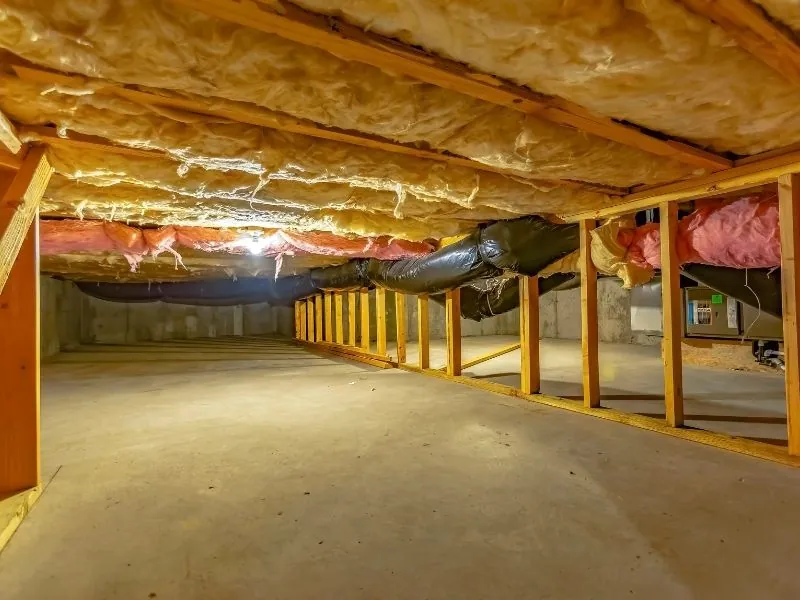
Uninsulated Raised-Floor Crawlspaces
Minor Homes on raised foundations have vented crawlspaces underneath, and the floor above usually has no insulation. In winter, cold outside air moves under the house and pulls heat out through the floorboards.
Why it happens here Builders in Pasadena used raised foundations for decades, from the 1900s through the 1950s, and almost never insulated the floor. Those crawlspaces have to stay vented, so the subfloor gets as cold as the outside air. Foothill nights in the 30s and 40s turn into cold hardwood and high SoCalGas bills. Crawlspace insulation also has to work around seismic retrofit hardware.
Signs to watch for - Cold floors in winter
- Drafts at baseboards
- Rooms over the crawlspace feel chilly
- Higher gas bills December–February
- Fallen or sagging old batts below
- Musty odor from below
Local patterns Common under Craftsman homes in Bungalow Heaven and Madison Heights, under Spanish homes in Playhouse Village, and in bungalow courts across South Lake and Lamanda Park.
Our fix We put insulation batts between the floor joists with proper supports, add vapor-permeable facing where it's needed, and seal any ducts that run through the crawlspace.
6
Asbestos-Suspect Vermiculite or Old Duct Wrap
Serious Vermiculite is a gray-brown, pebbly loose fill, and some of it contains asbestos. White chalky duct wrap from before 1980 can too. Either one has to be tested before anyone moves it, and if it's positive, it has to be handled under South Coast AQMD Rule 1403.
Why it happens here Vermiculite was a popular attic fill from the 1940s through the 1970s, so it shows up in a lot of Pasadena houses that were re-insulated during those years. Asbestos duct wrap was also common. If someone disturbs it without testing, fibers can spread through the house.
Signs to watch for - Pebbly, gray-brown or gold loose fill
- Chalky white wrap on old ducts
- Previous inspection report mentions vermiculite
- Pre-1980 HVAC equipment
- Crumbly material at duct joints
Local patterns We see it in 1940s–60s homes in Chapman Woods, Hastings Ranch, and East Pasadena, and in older homes that got upgrades around mid-century.
Our fix We stop work and arrange lab testing. If the result is positive, licensed abatement goes first, and then we re-insulate.
7
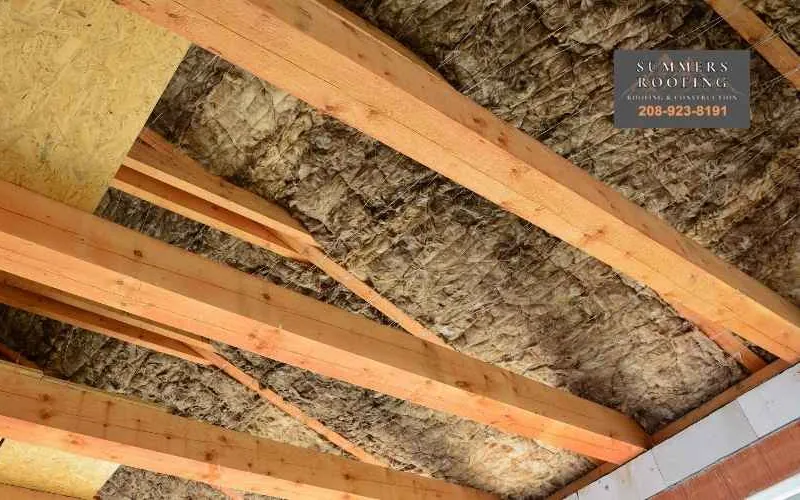
No-Attic Roofs and Exposed-Beam Ceilings
Moderate Flat Spanish roofs, low-slope Mid-Century roofs, and post-and-beam ceilings often have no attic or very little space above the ceiling. That rules out ordinary blown-in insulation, so the roof acts like a heater all summer.
Why it happens here Pasadena has a lot of Spanish Colonial homes and post-war Modern homes by Cliff May and Buff & Hensman. In those designs, the roof deck is the ceiling. Under full sun, rooms beneath that kind of roof can run 10–15°F hotter than the rest of the house.
Signs to watch for - Ceiling noticeably hot by midday
- No attic access hatch
- Rooms with beam ceilings overheat
- Condensation on cold winter mornings
- Single-pane glass adds to heat gain
Local patterns Common in Playhouse Village Spanish homes, Linda Vista and the San Rafael Hills Moderns, and the eastern hillside post-and-beam homes.
Our fix Depending on the roof, we use spray foam in any cavity we can reach, dense-pack insulation in closed cavities, or coordinate above-deck insulation when the roof is being replaced.